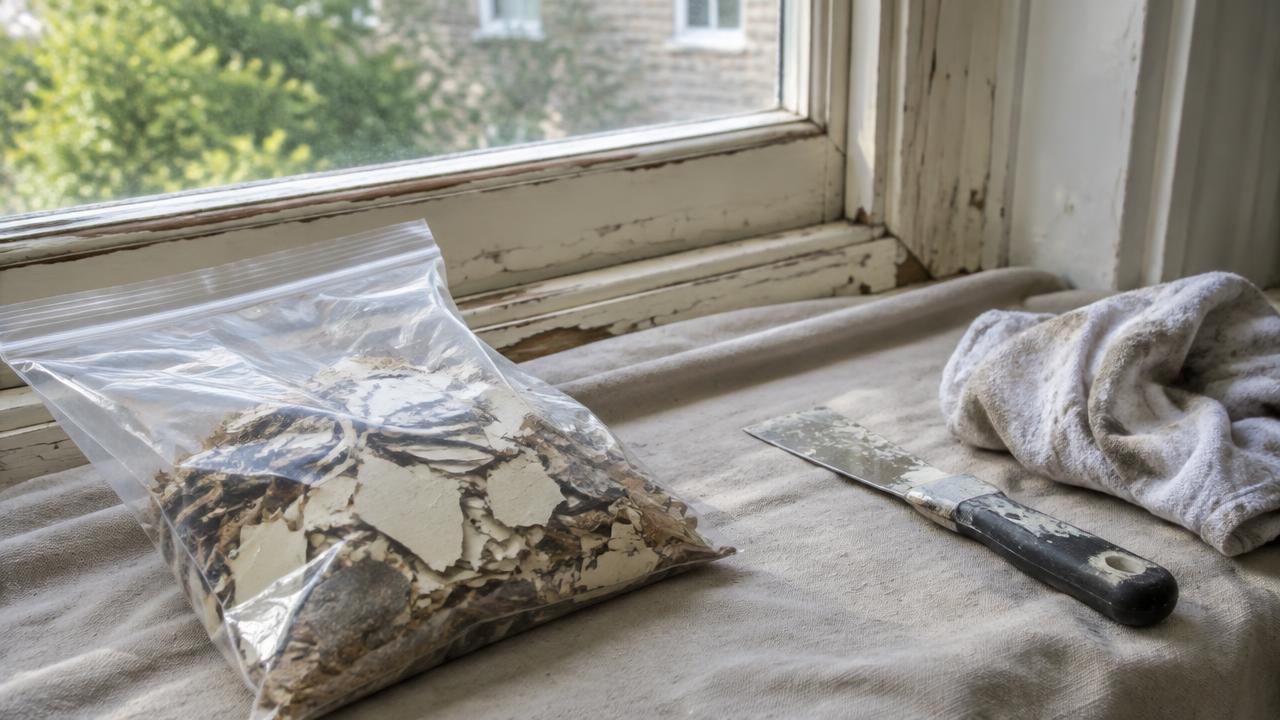
Refurbishment work on older buildings often uncovers paint layers that were applied decades ago, sometimes under several later coats. Some of those layers may contain lead, and that possibility affects how the resulting waste is handled, documented and collected.
This briefing covers the evidence a collection enquiry needs and how to plan containment and collection around it. It does not cover how to remove or strip the paint itself, because that is a method and safety question for your own risk assessment, separate from waste planning.
Why Older Coatings May Contain Lead
Lead pigments and lead-based driers were used in decorative and industrial paints for much of the twentieth century, particularly on joinery, metalwork and external surfaces. Later coats are often applied directly over these layers rather than replacing them, so a building's visible paint finish can sit on top of much older material.
This means the age of the building and the history of the surface (not just the colour or condition of the top coat) are the first clues to whether lead-bearing paint might be present in a refurbishment project.
The Evidence A Reviewer Will Want
Before waste from a refurbishment job can be assessed and accepted, it helps to gather the following.
| Evidence | Where It Comes From | Why It Matters |
|---|---|---|
| Age of building or structure | Building records, planning history, or visible construction style | Sets the likelihood that older coating layers are present |
| Previous survey or XRF test result | Commissioned lead paint survey, if one exists | Direct evidence of lead content at a specific location |
| Product labels or safety data sheets | Any surviving tins, labels or specifications from the original work | Identifies the specific product and its listed composition |
| Photographs of paint layers | Cross-section photos taken where paint has been exposed or sampled | Shows the number and condition of coating layers present |
Where none of this evidence exists, that itself is worth stating clearly rather than guessing. An honest 'we don't know, here's what we do know about the building' is more useful than an assumption in either direction.
Why Analysis May Be Needed
Where the evidence above is incomplete, analysis of a sample may be needed before the waste can be classified and accepted. This follows the same logic as other construction waste: the Environment Agency's guidance on classifying construction and demolition waste sets out that waste producers need enough information about composition to classify it correctly, and that assumptions based on appearance alone are not sufficient for materials that could be hazardous.
Analysis is a step in the waste classification process, not a delay for its own sake; it gives the documented basis for deciding how the material is categorised and handled from that point on.
Containment As Work Proceeds
Once lead-bearing paint is suspected or confirmed, the debris generated as work proceeds needs to be kept contained and separate, rather than swept into a general skip.
- Keep paint flakes, scrapings and dust from suspect areas in their own sealed containers, separate from general construction debris.
- Avoid mixing lead-bearing residue with other waste streams on site, including other paint waste that is known not to contain lead.
- Label containers clearly as they are filled, noting the location on site they came from.
- Keep containers closed between work sessions to stop residue being disturbed or spread.
Planning Collection Around The Work
Refurbishment projects often generate lead-bearing residue gradually, as work moves through a building room by room or elevation by elevation. Planning collection early (before work starts, rather than once containers are already full) lets the number and size of containers, and how often they are exchanged, match the actual rate of removal.
This is particularly useful on multi-phase projects, where a single collection at the end of the job would mean storing containers of suspect residue on site for weeks or months.
Documentation And Worker Safety
Keep a record alongside each container: the evidence gathered, the location on site, the date filled, and any analysis results. This record travels with the waste and supports its classification at collection.
Health and safety controls for workers carrying out the removal work are a separate matter, sitting with your own risk assessment. The Health and Safety Executive's guidance on working safely with lead (INDG305) and its frequently asked questions on lead cover exposure from dust and fume during removal work; these sit alongside waste planning rather than replacing it, and removal method is not something this guide covers.
For the waste itself, lead paint waste disposal covers the collection process once you have gathered the evidence above. Where paint stripping chemicals have also been used as part of the project, see paint stripper waste disposal for that separate stream.
Sources
Where The Information In This Guide Comes From
Guidance cited applies to England unless the source states otherwise. Wales, Scotland and Northern Ireland publish their own guidance, and requirements can differ.
- 1.Frequently asked questions on lead · Health and Safety Executive
- 2.Lead and you: working safely with lead (INDG305) · Health and Safety Executive
- 3.Construction and demolition waste: how to classify · Environment Agency / GOV.UK, Last updated 13 August 2025
- 4.Hazardous waste: segregation and mixing · Environment Agency / GOV.UK, Last updated 1 October 2020
This article is for general information only and does not constitute professional, legal or chemical advice. Waste producers are legally responsible for correctly classifying their waste. For guidance on your specific waste, please contact our team.
Not sure which of these describes what you are holding? Tell us what you have and we will work it out with you.
Request a collection quote