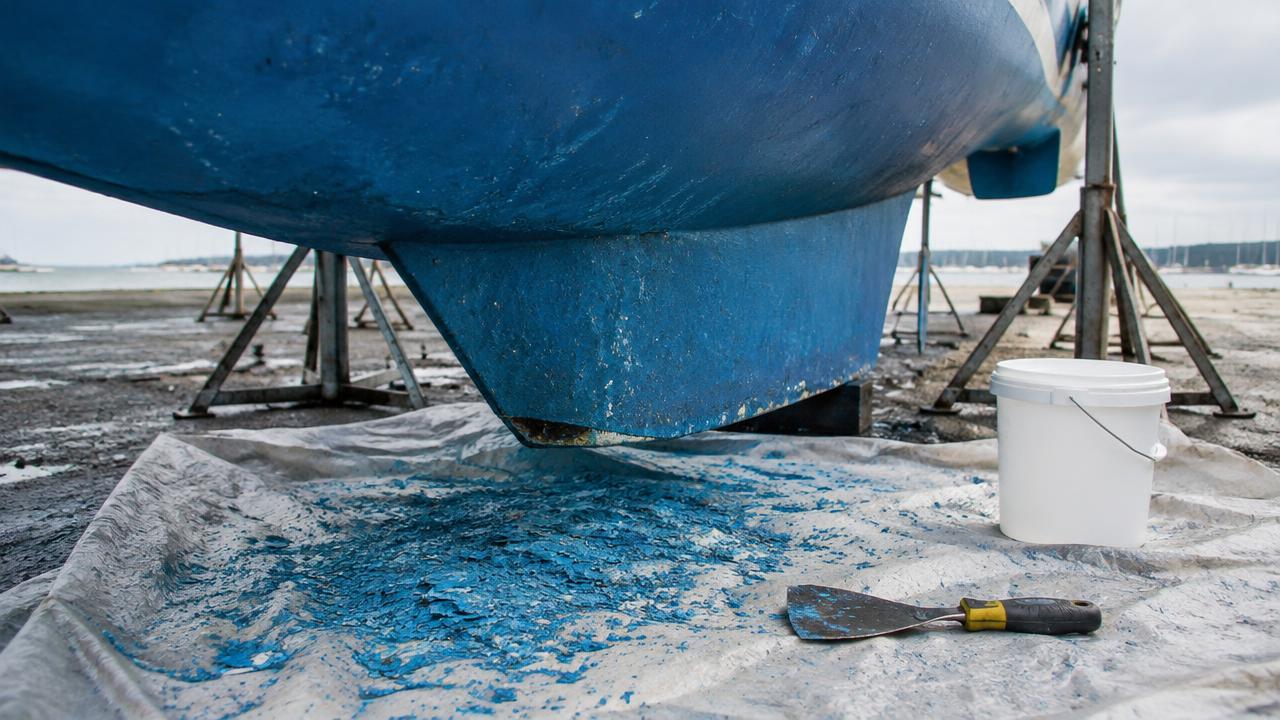
Boatyards and marine contractors deal with a waste stream that most other paint users never see: coatings designed to release biocide into water, removed by scraping, sanding or pressure-washing onto hard-standing rather than into a spray booth.
This guide sets out why those residues are treated with care, what to keep apart, and what a yard should record before asking for a collection.
Why Antifouling Is Different
Antifouling coatings are applied below the waterline specifically to deter marine growth. To do that job, they are formulated to release a biocide slowly into the surrounding water, commonly compounds based on copper or zinc. The Royal Yachting Association's guidance on antifouling sets out why these products are controlled and why their use and disposal both carry environmental conditions.
That same biocidal purpose is what makes the removed material worth separating out carefully once it becomes waste. Dust, flakes and scrapings taken off a hull are not inert debris because they carry the active ingredients the coating was designed to release, and the same applies to anything that has rinsed or settled from the hull during cleaning.
Keeping The Streams Apart
A typical hull job produces several distinct materials, and they should not be allowed to mix. Dry removal debris, pressure-wash run-off, and any unused liquid antifouling or thinners each raise different handling questions, and the government's guidance on hazardous waste segregation and mixing is clear that different categories of hazardous waste must not be combined without assessment.
- Dry scrapings and sanding dust: collected separately from wash water, not swept into a drain or left on the hard-standing.
- Pressure-wash run-off: contained rather than allowed to run to a drain or the water, as it carries dissolved and suspended residue from the hull.
- Unused product and thinners, kept in their original, labelled containers wherever possible.
- Contaminated applicators, rollers and PPE, bagged separately rather than added to general yard waste.
Protect, Collect And Dispose
The RYA's Protect, Collect and Dispose approach gives a straightforward structure for the job: protect the work area so debris cannot reach the water or soil, collect everything that comes off the hull during removal or cleaning, and dispose of paint pots, gloves, brushes and scrapings as hazardous waste rather than general refuse.
In practice, protecting the area usually means sheeting or matting under the hull before work starts, so that scrapings and dust land on a surface that can be gathered up rather than on open ground. The Green Blue's antifouling guidance makes the same point for smaller craft and individual boat owners, and the same logic scales up to a yard running several hulls at once.
What To Record
Where the product used is known, record it. Antifouling ranges vary in their active ingredient and formulation, and knowing the product name, or holding a safety data sheet, makes an assessment faster and more accurate than working from a description of colour or texture alone.
Where several boats or several seasons of coating are involved, note which hulls produced which debris if that is practical. A single stream labelled simply 'hull scrapings' from a yard that has applied several different products over several years is harder to assess than one tied to known products and approximate dates.
Waste Stream Inventory
The table below sets out the streams a boatyard or marine contractor is likely to generate, how each typically arises, and what is worth recording before a collection is arranged.
| Stream | How It Arises | What To Record |
|---|---|---|
| Hull scrapings and dust | Scraping, sanding or grit-blasting old antifouling before recoating | Hull size, number of boats, product used where known, collection method |
| Pressure-wash run-off | Washing a hull before haul-out or before recoating | Whether run-off was contained, approximate volume, containment method |
| Unused antifouling and thinners | Leftover product from a job, or stock no longer in use | Product name, quantity, container condition, whether opened |
| Contaminated applicators and PPE | Rollers, brushes, gloves and masks used during application or removal | Approximate quantity, whether bagged separately |
| Old hull coatings removed as sheet | Coating lifted off in sections rather than scraped to dust | Approximate area or weight, how it is currently stored |
Assessing Mixed Or Unknown Residue
Not every yard can identify every product that has gone onto every hull over the years. Where residues are mixed, unlabelled or of unknown origin, that is treated as an individual assessment rather than refused outright: tell us what you can about how the material arose, and we will work from there.
The waste-handling side of a marine job usually runs alongside other coating waste from the same site, such as hull paint pots or solvent based topside finishes. Where that applies, see oil and solvent based paint disposal for the liquid paint side of the job, and paint contaminated materials disposal for the scrapings, rags and PPE that come off the hull alongside it.
Sources
Where The Information In This Guide Comes From
Guidance cited applies to England unless the source states otherwise. Wales, Scotland and Northern Ireland publish their own guidance, and requirements can differ.
- 1.Antifouling · Royal Yachting Association
- 2.Antifouling · The Green Blue (RYA and British Marine), Published 1 September 2019
- 3.Protect, Collect, Dispose · Royal Yachting Association
- 4.Hazardous waste: segregation and mixing · Environment Agency / GOV.UK, Last updated 1 October 2020
This article is for general information only and does not constitute professional, legal or chemical advice. Waste producers are legally responsible for correctly classifying their waste. For guidance on your specific waste, please contact our team.
Not sure which of these describes what you are holding? Tell us what you have and we will work it out with you.
Request a collection quote